Fans, Scott Lynch's 'The Republic of Thieves' is out in shops today! Non-fans, take note: this is the latest in a highly entertaining fantasy series which you absolutely should read! Unfortunately, this is yet another of those fantasy series with delays of years between installments, so prepare yourselves for a long wait after reading 'The Lies of Locke Lamora', 'Red Seas Under Red Skies', and this excellent third part. I may have possibly seen a tentative date of 2017 for the fourth novel, 'The Thorn of Emberlain' earlier on today, so during the wait you'll have to occupy yourselves with excellent novels such as Patrick Rothfuss' Kingkiller Chronicles, Brandon Sanderson's Mistborn series and Stormlight Archive (the latter if you really LOOVE waiting), Peter V. Brett's Demon Cycle... (If you still need more recommendations, leave a comment!).
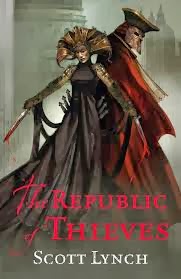 'The Republic of Thieves' continues the story of a group of master con artists known as the Gentlemen Bastards. I know that this novel is one which the fans have been waiting an awfully long time for, so, in case you haven't read it yet, and in an attempt to be completely spoiler-free, I won't go into any detail regarding plot. Republic does feature our two favourite criminals Locke Lamora and Jean Tannen as they embark on a new adventure. Once again, the narrative is divided as alternate chapters focus on the present-day storyline of Locke and Jean's latest project and the backstory of Locke's childhood and unusual apprenticeship with the previous leader of the Gentlemen Bastards, a priest of the Crooked Warden known as Chains. Republic is as intricate and enthralling an undertaking as its predecessors, and just as satisfying. It does introduce a new aspect of Locke's personality which is somewhat surprising but very rewarding, if a tiny bit forced at times. (Aagh it's difficult to be so vague!). If you've ever enjoyed a fantasy novel, and probably even if you never have, go out and try these. It's great fun wrapped up in some beautifully detailed locations, shrewd scheming, and plentiful evidence of the wild and devious imagination of the author.
  This week I also read 'Starters' by Lissa Price, which I thought was quite a good new Young Adult dystopian thriller. In a future world where the use of biological weapons have killed everyone on Earth between the ages of 20 and 60, the old-age 'Enders' have all the power. Legislation has been passed banning young 'Starters' from working, so minors who have not been sponsored by an 'Ender' are liable to be rounded up by law enforcement and institutionalised, leading to a huge gulf between Enders and their families and the homeless and disenfranchised Starter children. Callie is an unsponsored minor, and in an attempt to earn some money to pay for medical treatment for her sick brother, she goes to a company which offers wealthy Enders the opportunity to hire, and temporarily transfer their consciousness to, the body of a beautiful and healthy young Starter. This process is not legal, but Callie's problems quickly become much more severe than getting caught when she comes to realise that the Ender who is renting her body has some sinister plans for it. This is an entertaining read, with some of the consequences of such an inequal and lopsided society seeming only too possible in reality. The female protagonist is having a strong moment in teen literature right now, but there's always room for more, and Callie fits in well with this trend. Teens who enjoyed 'The Hunger Games' and anyone who enjoys a nice dystopia (!) should check this one out.
Until next time!


